This timeline follows the documented history of local mycology—from early specimen records and regional inventories to RAMA’s community learning and conservation work. Dates are labeled carefully where the public record is incomplete.
A timeline of Rochester-area mycology
-
1868–1913
Charles H. Peck builds a state fungi collection

Charles Horton Peck, New York State Botanist 1868–1913. Public-domain image via Wikimedia Commons. Charles H. Peck served as New York State Botanist from 1868 to 1913. During those years, he built the New York State Museum’s mycology collection, amassing 33,600 fungal specimens. A few surviving records show how widely his collecting reached into western New York.
In 1872, Peck collected Marasmius longipes in Savannah, Wayne County. In 1904, he collected Phyllosticta pallidior at Bergen Swamp in Genesee County; that specimen is the holotype, or reference specimen, for the species. The Museum’s collection now holds more than 90,000 specimens and preserves many early records of American mycology.
-
1871–1878
George W. Clinton collects fungi around Buffalo
George W. Clinton, a Buffalo-based collector, is another early mycologist represented in the New York State Museum’s records. His specimens include fungi gathered in Buffalo across the 1870s. Among them are the 1871 holotype of Uncinula macrospora, the 1874 holotype of Venturia clintonii, and an 1878 holotype of Peziza sphaerella, described by Peck and Clinton. These records give named, dated examples of the region’s early field and taxonomic work.
Sources (3)
Clinton’s 1871 Buffalo specimen · 1874 specimen · 1878 specimen
-
1890
The Rochester Academy and a landmark fungi inventory
The Rochester Academy of Science’s first Proceedings volume described its botanical section’s effort to compile a flora of Monroe County. In the same volume, Dr. Charles E. Fairman published “The Fungi of Western New York,” reporting five years of work on Orleans County’s mycological flora and more than 425 collected fungi. Fairman went on to amass a personal collection of more than 23,000 fungi and collected for Cornell’s herbarium and the New York Botanical Garden.
-
1892–1918
George F. Atkinson advances Cornell mycology

George F. Atkinson. Public-domain image via Wikimedia Commons. Cornell recruited George F. Atkinson in 1892 as an assistant professor of cryptogamic botany. A leading mycologist and teacher, he focused much of his Cornell work on fungi, especially mushrooms, and described nearly 400 fungal species. He collected extensively around Ithaca and Cayuga Lake; his agaric specimens, field notes, and pioneering photographs are now preserved in Cornell’s Plant Pathology Herbarium as the Atkinson Collection (CUP-A).
CUP’s records give a few vivid local examples: a type specimen of Amanita floccocephala from Cascadilla Woods (1897), the holotype of Agaricus cretacellus from Cascadilla Woods (1900), and a type specimen of Pluteus flavofuligineus from Coy Glen (1901). These sites are in Ithaca, in the Finger Lakes region west of Syracuse—not western New York in the narrower Rochester-area sense.
-
1900–1904
Fairman describes new fungi from Lyndonville and Orleans County
In “Some New Fungi from Western New York,” Charles E. Fairman described several new fungi based on local collections. Karschia crassa came from decaying wood in the Lyndonville woods in July 1904, at the site now known as Robin Hill Nature Preserve. Other examples include Sphaeropsis thalictri, collected on dead Thalictrum stems in Yates, Orleans County, in 1900; Botryodiplodia amalanchieris, collected on dead Amelanchier twigs in Lyndonville in 1904; and Pyrenopeziza cephalanthi and Lophiostoma cephalanthi, collected on Cephalanthus branches in Ridgeway in August 1904.
-
1907
Cornell establishes the Plant Pathology Herbarium

Herbert Hice Whetzel, 1937. Image via Wikimedia Commons (CC BY-SA 4.0). When Cornell established its Department of Plant Pathology in 1907, its first chair, Herbert H. Whetzel, also founded the department’s herbarium with specimens from his personal collection. The Cornell Plant Pathology Herbarium (CUP) grew into a major research collection for fungi and plant disease. It now includes Atkinson’s important mushroom collection as well as the authors’ herbaria of Fairman and other mycologists.
-
1916–1922
Fairman records more new fungi from Lyndonville and Orleans County
Fairman’s 1922 “New or Rare Fungi from Various Localities” described additional new fungi from his earlier collecting. Lyndonville examples include Phomopsis rubiseda on dead branches of Rubacer odoratum and Cytospora nyssae on Nyssa sylvatica, both collected in 1918. The paper also described Stemphylium subsphaericum from rotten wood in Palmer’s Woods, Town of Ridgeway, in 1918, and Amblyosporiopsis parasphenoides from maple bark in the Town of Yates in 1920.
-
1962
Leo Tanghe teaches mushroom identification
By 1962, Dr. Leo Tanghe was teaching mushroom identification at the Rochester Museum of Arts and Sciences. The Museum’s year-end report lists a field course he directed with W. Stephen Thomas: eight sessions held from July through September. People who took Tanghe’s classes called themselves the Rochester Fungifiles, and they organized group hikes, including some of the first forays to Letchworth State Park.
Sources (1)
-
1971–1973
A Rochester death-cap collection enters the record
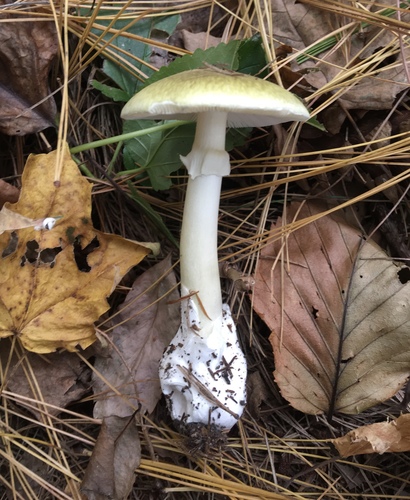
Amanita phalloides (death cap) observed in New York. Photo: sigridjakob via iNaturalist (CC0). On October 15, 1971, Rev. James Wolf collected Amanita phalloides at Durand Eastman Park. Wolf was taking a field-identification class taught by Leo Tanghe. In 1973, Tanghe and Donald M. Simons reported the Rochester collection in their paper on eastern U.S. records of A. phalloides, helping establish the species’ documented presence in the region. The collection date is a dated record, not evidence of when the mushroom first arrived.
-
October 1984
RAMA is founded
In October 1984, the Rochester Fungifiles formally organized as the Rochester Area Mycological Association (RAMA) so they could continue learning together. The first meeting was held at Helmer Nature Center in Irondequoit, which hosted the club for several years. Founding members included Steve Daniel, Laramie Brown, William Hollenbaugh, and brothers Dave and Carl Wolf.
-
1968–c. 2008
Ernst Both’s work on North American boletes
At the Buffalo Museum’s Clinton Herbarium, Both began the Bolete Collection in 1968; collecting continued for the next 40 years. He and Beatriz Ortiz-Santana published an index to the collection in 2012. Both also published The Boletes of North America: A Compendium, a major reference on this group of fungi. RAMA’s current calendar includes an annual Both Foray at Letchworth State Park, carrying his name into the club’s field-learning tradition.
-
1990
Marie Heerkens documents Rochester fungi through art and photography
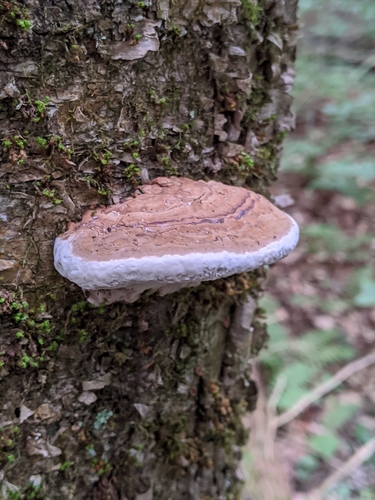
Artist’s conk (Ganoderma applanatum), the canvas for Heerkens’s pyrography, observed in Richford, NY. Photo: cgmayers via iNaturalist (CC0). Photography drew artist and naturalist Marie Heerkens to mushrooms, and she joined RAMA in 1990 to learn to identify them. She later revised and updated The Field Guide to Mushrooms, first written in 1928 by Dr. William S. Thomas, father of the W. Stephen Thomas who directed the Museum’s 1962 course with Tanghe. Her photographs and drawings illustrate the 2003 edition. In the summer of 2009, at the invitation of Marilyn Nolte of the Friends of Mount Hope Cemetery, she began an ongoing survey of the cemetery’s fungi that has recorded more than 45 kinds of mushrooms. She is also known for pyrography on artist’s conk (Ganoderma applanatum), which she began in 1991.
-
1993–present
Alan and Arleen Bessette broaden access to New York mycology
Mycologists Alan and Arleen Bessette helped bring mushroom identification and fungal knowledge to readers across New York and beyond through books including Common Edible and Poisonous Mushrooms of New York. Alan authored or co-authored more than 30 books, advised the New York State Poison Control Center, and served for more than 20 years as scientific adviser to the Mid York Mycological Society. Arleen co-authored more than 20 books and mycology papers and is also known for her botanical photography. Their joint publication record began with Taming the Wild Mushroom: A Culinary Guide to Market Foraging in 1993 and continues today. Their 2025 second edition of Common Edible and Poisonous Mushrooms of New York is among their recent work. Their publications connect scientific expertise with public education and regional mycological communities.
-
1998
Western New York collections become seven named bolete species
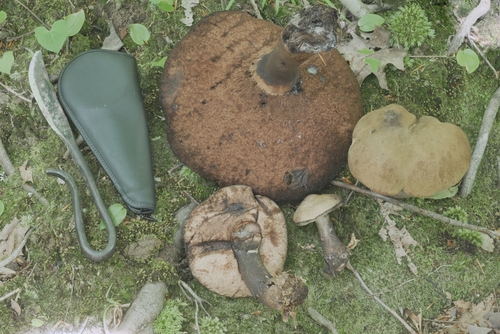
Tylopilus atronicotianus, one of Both’s 1998 species, observed in Cattaraugus County, NY. Photo: fungee via iNaturalist (CC0). Ernst Both’s 1998 paper described six new bolete taxa from western New York. Their type collections came from Erie County: Tylopilus atratus from near Ward Road in Orchard Park (August 18, 1973); Tylopilus atronicotianus (August 21, 1996), Boletus pallidoroseus (August 18, 1987), Boletus rhodosanguineus (July 7, 1987), and Boletus rufomaculatus (July 29, 1986) from Chestnut Ridge Park; and Boletus viscidocorrugis from Marion Fricano Memorial Park in North Collins (August 10, 1986). Timothy J. Baroni and Both described a seventh species, Tylopilus violatinctus, in a separate paper that year, based on Both’s August 7, 1980 collection at Chestnut Ridge Park. These are the names used in the original descriptions.
-
2000
Letchworth and Chestnut Ridge collections enter North American Boletes
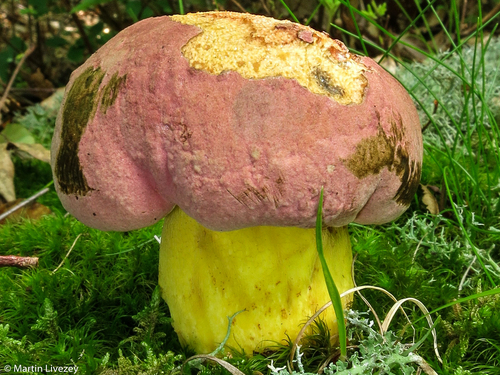
Butyriboletus roseopurpureus, first described from Both’s Chestnut Ridge collection, observed in Virginia. Photo: martin_livezey via iNaturalist (CC BY). R. Riedel collected the type of Boletus nobilissimus at Letchworth State Park in Wyoming County on July 11, 1998. Both and Riedel formally described the species in the 2000 book North American Boletes by Alan Bessette, William Roody, and Arleen Bessette. The same book published Both, Bessette, and Roody’s description of Boletus roseopurpureus, now Butyriboletus roseopurpureus, based on Both’s July 27, 1995 collection at Chestnut Ridge Park. Both stories connect familiar western New York parks with the specimens used to name fungal species.
-
2018
Geneseo hosts the NEMF Samuel Ristich Foray
The Northeast Mycological Federation (NEMF) held its annual Samuel Ristich Foray at SUNY Geneseo on July 26–29, 2018. The regional gathering brought mushroom enthusiasts and mycologists together for field collecting and identification, lectures, and workshops. NEMF’s archive preserves the event program and photographs, including images from Letchworth, documenting a major mycological gathering in western New York.
-
Fall 2024
RAMA celebrates forty years of shared mushroom study
RAMA celebrated its 40th anniversary with a foray and picnic at Letchworth State Park. Forty years after its founding in October 1984, members gathered to continue the club’s tradition of exploring fungi and learning together.
-
2025
Trumansburg NY hosts the NEMF Samuel Ristich Foray
RAMA was one of the host clubs for the Northeast Mycological Federation’s Samuel Ristich Foray, held September 18–21, 2025, at Camp Comstock on Cayuga Lake near Trumansburg. The event’s theme, “Women in Mycology,” honored women’s contributions to the field while exploring Finger Lakes fungal diversity and the connections between mycology and entomology. Forays, scientific diversity surveys, presentations, and hands-on workshops brought the regional community together. Although the venue was outside western New York in the narrower geographic sense, RAMA’s co-hosting role makes the gathering part of Rochester’s community mycology history.
-
In the last decade
21st Century Community Mycology in WNY
Post-pandemic, RAMA has focused on returning to its roots as a community-science-driven organization, partnering with public and private organizations—from the New York State Department of Environmental Conservation (DEC) and the New York State Office of Parks, Recreation and Historic Preservation (OPRHP) to land trusts and conservation groups.
Sources (8)
Finger Lakes Land Trust · Genesee Land Trust · Genesee Conservation League · The Nature Conservancy in New York · Paleontological Research Institution (Cayuga Nature Center) · Bergen Swamp Preservation Society · New York State Department of Environmental Conservation · New York State Office of Parks, Recreation and Historic Preservation


Submit a Historical Event Know of an event we are missing?
Suggest a mycological event for the timeline. Include dates, locality, collector or participants, specimen IDs and source links when available. Suggestions are reviewed before publication.
Your species/event name and notes will be emailed to rocmyco@gmail.com. Do not include confidential information or sensitive collecting coordinates. If you would like a reply, include your contact information in the notes.